Other Versions
Find Any File is Shareware
You may try it out without buying first. Simply download it from this website (but not from the App Store).
If you keep using it you are expected to pay for it, though.

Find Any File (FAF)
Key Features
- Convenient folder and icon views for results
- Can search in other users' home folders ("root" mode)
- Searches can be saved for easy re-use
- Can be launched with a self defined keyboard shortcut
Links
New in version 2.6:
- AppleScriptable.
- Columns for Comments, Trashed, Hidden.
- Finding Comments is more reliable.
New in version 2.5:
- Adds a Name without Extension rule.
- Can search modern Time Machine backups (APFS snapshots)
- Faster search on Synology and QNAP, as well as on Windows shares with Everything.
- New script for finding duplicate files.
New in version 2.4:
- Scriptable rules for powerful and complex searches.
- File content search now finds text inside zip files, including .docx (Word) and .xlsx (Excel) files
- Support for Default Folder X and BBEdit.
- See the Version History for a detailed list of changes.
How to enable Full Disk Access in Find Any File
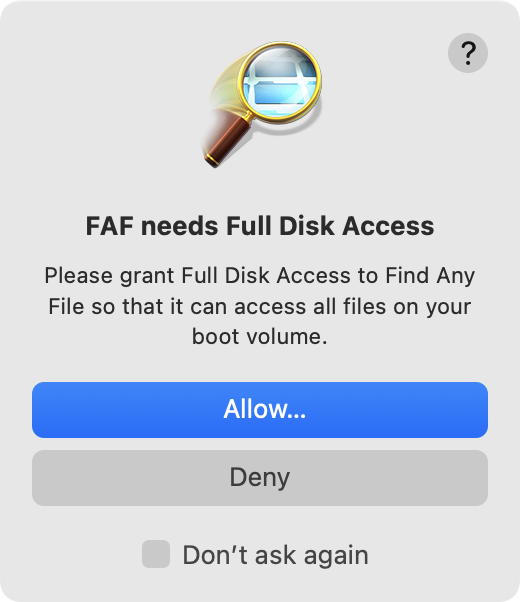
When starting FAF, it may present a dialog saying "FAF needs Full Disk Access".
| macOS 13 and later | macOS 12 and earlier |
|---|---|
 |
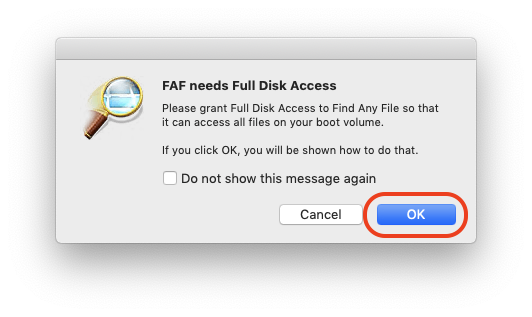 |
Click Allow or OK to continue to open the system settings for Full disk Access.
If you choose Deny or Cancel, FAF may not be able to search your disks entirely. And you may get a lot more
prompts to access various folders on your disk when searching. It's smarter to give Full Disk Access to avoid
the hassle.
See "Troubleshooting" below to enable it later.)
How to proceed on macOS 13 and later
Drag the Find Any File icon from below into the list of applications so that it appears in there and is enabled.
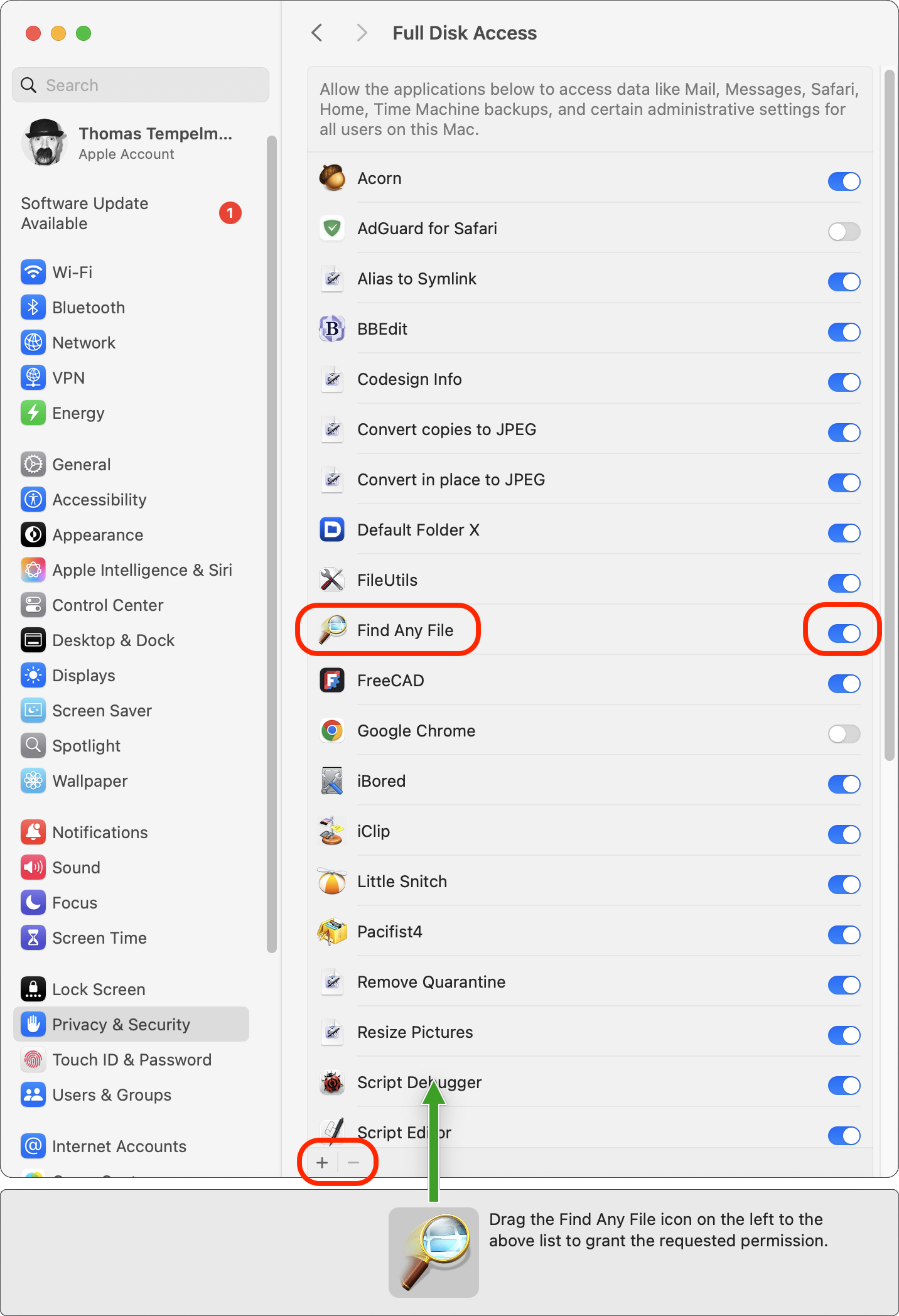
Note that you can also click the [+] button to add an app or the [–] button to remove a selected app. If an app doesn't
have full disk access even though it appears to be enabled here, trying removing and then adding the app again, as that
often fixed the issue (which usually appears when you run different versions of the same app, e.g. from the Mac App Store
vs. one downloaded from elsewhere like the developer's website).
How to proceed on macOS 12 and earlier
System Preferences will show the Security & Privacy panel, with "Full Disk Access" selected on the left.
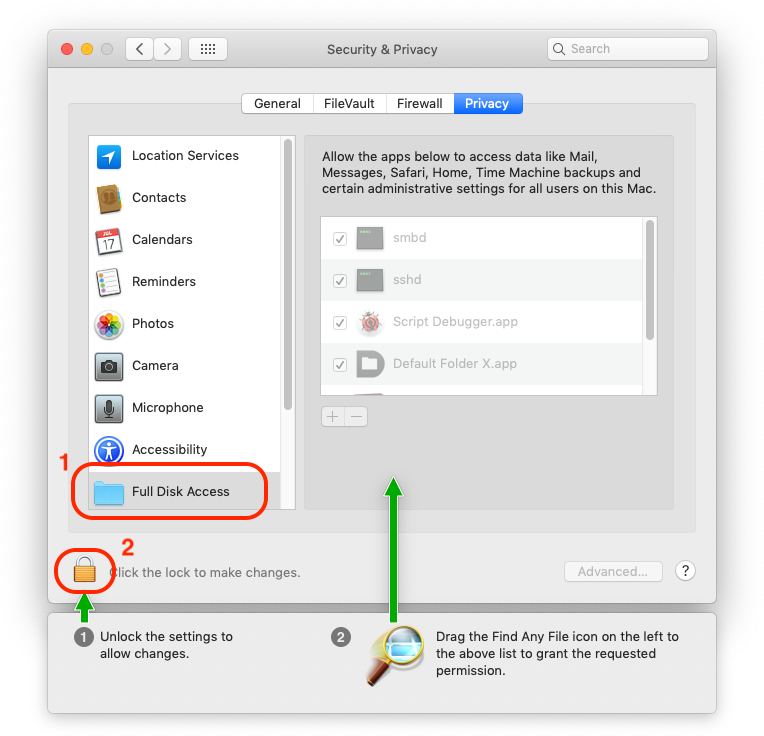
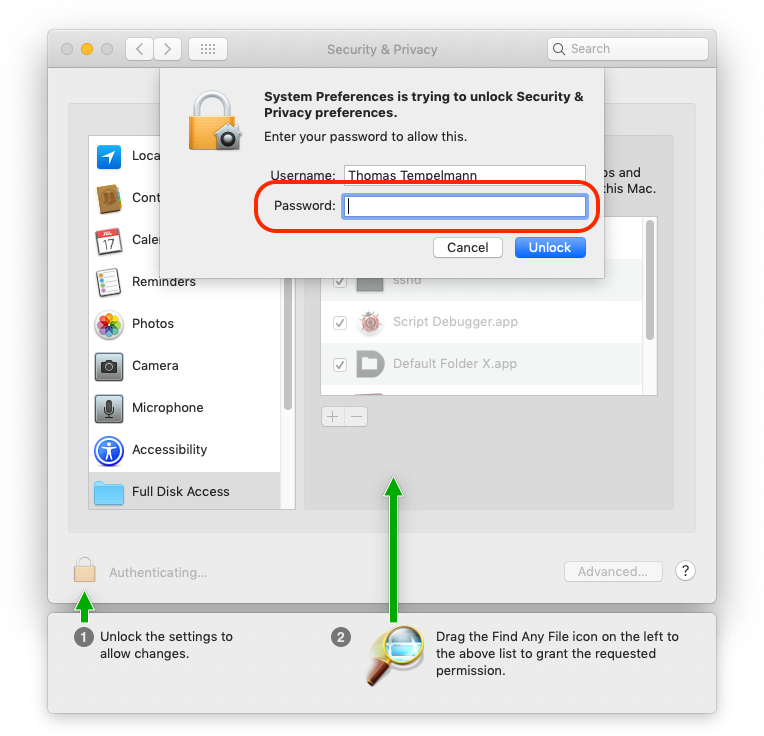
If the lock icon at the bottom left is not open, click it and enter your administrator password.
Finally, drag the icon you see below into the upper right panel.
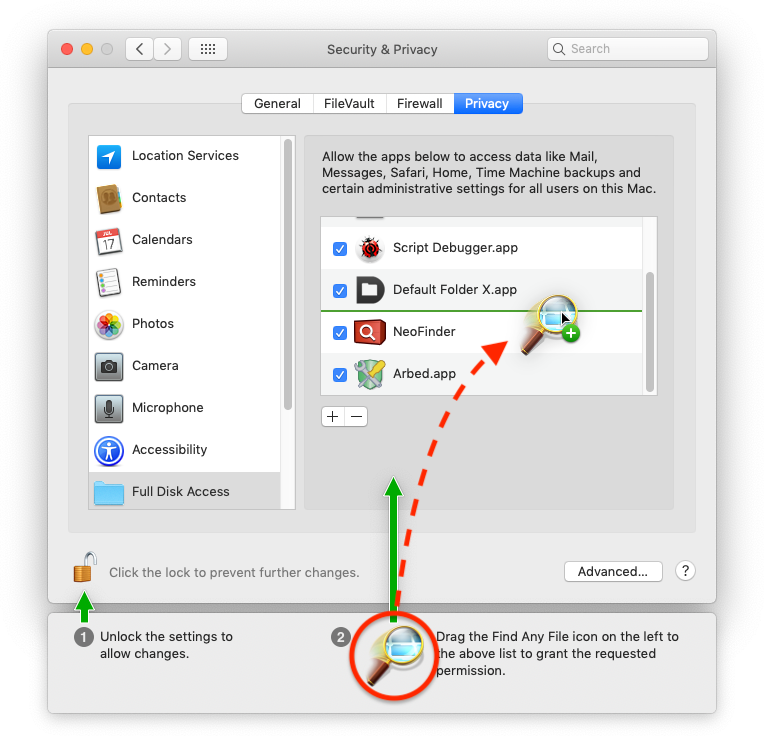
After quitting and reopening FAF you're finished.
Troubleshooting
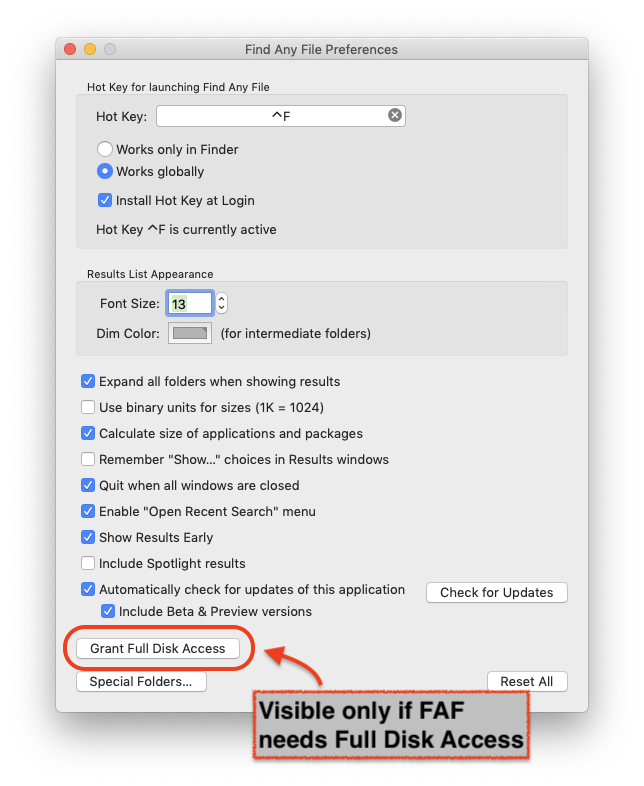
You may have accidentally denied "Full Disk Access" to FAF before. To check, open FAF's Preferences window. If there's a button titled "Grant Full Disk Access", click it and then proceed as shown above.